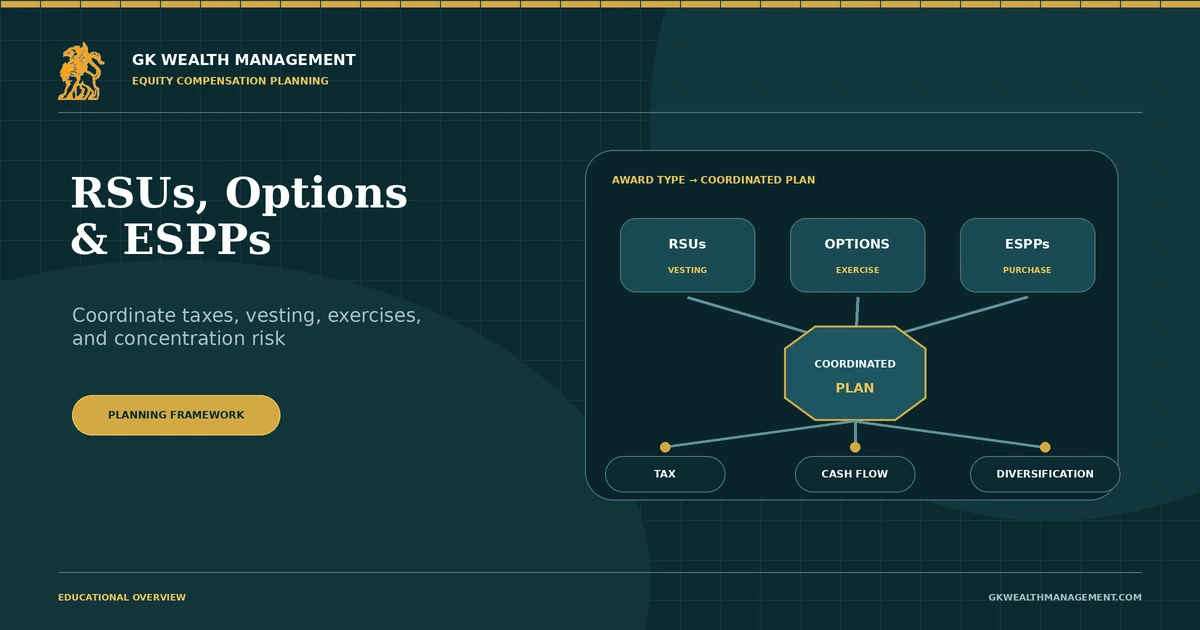
Award and Tax Timing
Equity Compensation: RSUs, Options & ESPPs
Understand vesting, exercise, AMT, withholding, basis records, trading restrictions, and when employer shares become an investment decision.
Read the equity compensation guide →Educational Planning Guide
A connected resource for understanding equity awards, managing employer-stock exposure, comparing diversification approaches, and coordinating taxes, liquidity, risk, and timing within one financial plan.
Written by Griffin Kirsch, Founder & Principal Advisor
Quick answer
Equity compensation can create a concentrated stock position. Diversification can reduce single-company exposure, but the timing and method may affect taxes, liquidity, portfolio risk, employer trading restrictions, and charitable plans. The three guides below address different parts of the same planning sequence. They are educational resources within GK Wealth Management's established financial-planning, investment-management, and tax-coordination services.
Three Connected Resources
Each page has a distinct purpose. Use the equity-compensation guide to identify the award and tax event, then compare ways to reduce or manage an existing concentrated position.
Understand vesting, exercise, AMT, withholding, basis records, trading restrictions, and when employer shares become an investment decision.
Read the equity compensation guide →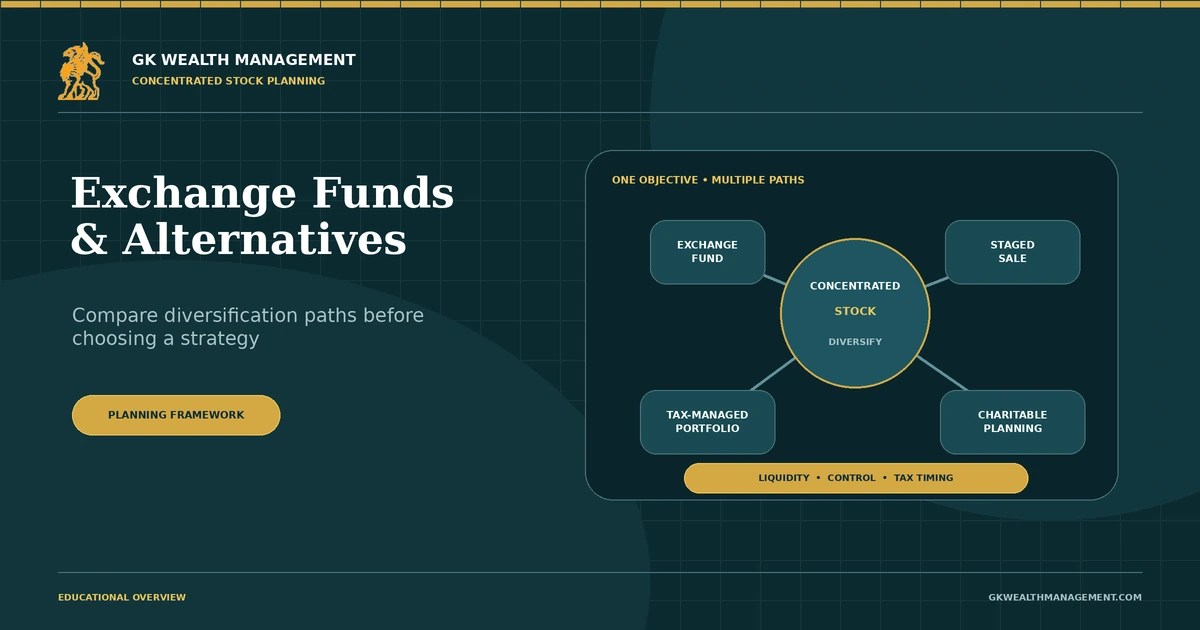
Compare exchange funds, staged sales, tax-managed portfolios, hedging, and charitable strategies across liquidity, control, tax timing, and risk.
Compare concentrated-stock alternatives →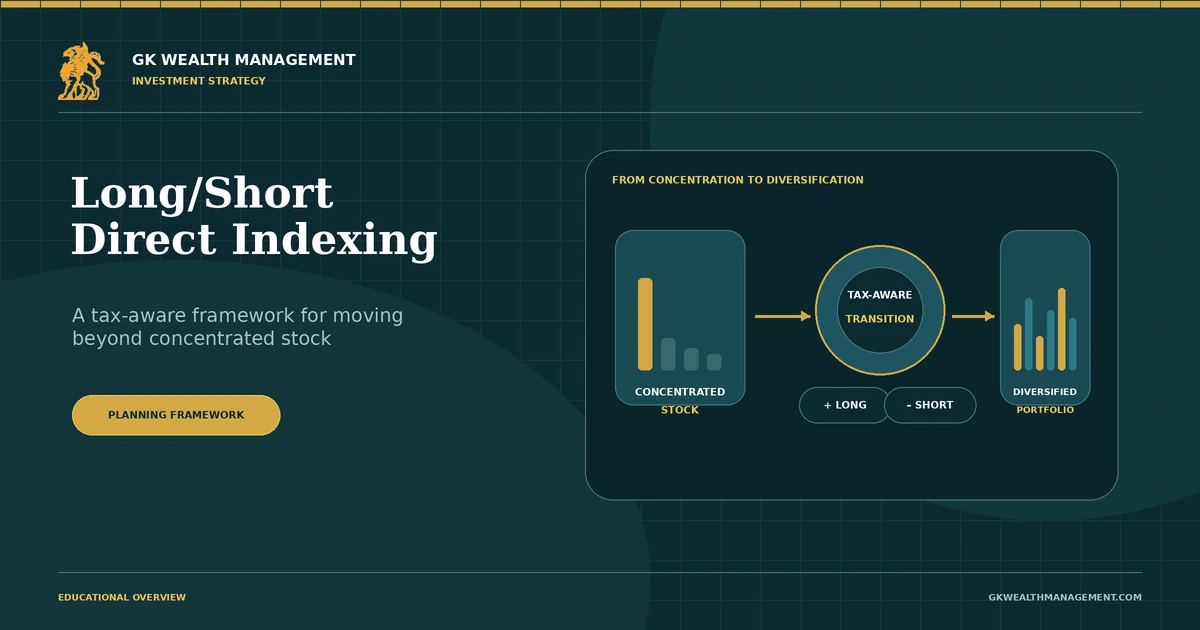
Learn how a long/short portfolio may support a staged stock transition and why margin, borrow, tracking-error, cost, and tax risks matter.
Explore long/short direct indexing →Planning Sequence
Combine vested shares, unvested awards, options, ESPP shares, future grants, and overlapping fund exposure.
Document tax basis, vesting and expiration dates, blackout windows, liquidity needs, charitable intent, and household risk limits.
Evaluate immediate and staged sales, tax-managed portfolios, exchange funds, hedging, and charitable strategies after fees, taxes, and risk.
Where the Guides Fit
These topics do not create new standalone service lines. They support the coordinated work GK already performs across planning, investments, and tax-aware decision-making.
Coordinate compensation, cash flow, goals, liquidity, insurance, retirement, and estate considerations.
Financial planning services →Evaluate concentration, diversification, portfolio construction, implementation costs, and ongoing risk.
Investment management services →Model tax timing and coordinate implementation with the client's CPA, attorney, employer, or other appropriate professionals.
Tax-efficient planning services →Scope and Limitations
This collection is an educational planning guide, not a separate service or a claim of specialist status. GK Wealth Management provides financial planning and investment advice and coordinates with qualified tax, legal, employer-plan, and securities professionals when a decision requires work outside GK's advisory scope.
This material is general education, not individualized investment, tax, accounting, employment, or legal advice. No strategy guarantees a particular investment or tax result. Registration as an investment adviser does not imply a certain level of skill or training.
Review the tax event, concentration risk, liquidity needs, implementation choices, and professional coordination together.